



















Are We Living on Our Phones? Jolt App Study of 10,000 Users Reveals Shocking Trends
New Delhi [India], March 12: A new global study has found that daily smartphone use has climbed to levels researchers say could reshape how people work, rest, and recover. The State of Human Attention report, released by The Jolt Screen Time App, the best screen time app, analysed the behaviour of nearly 10,000 users and [...]

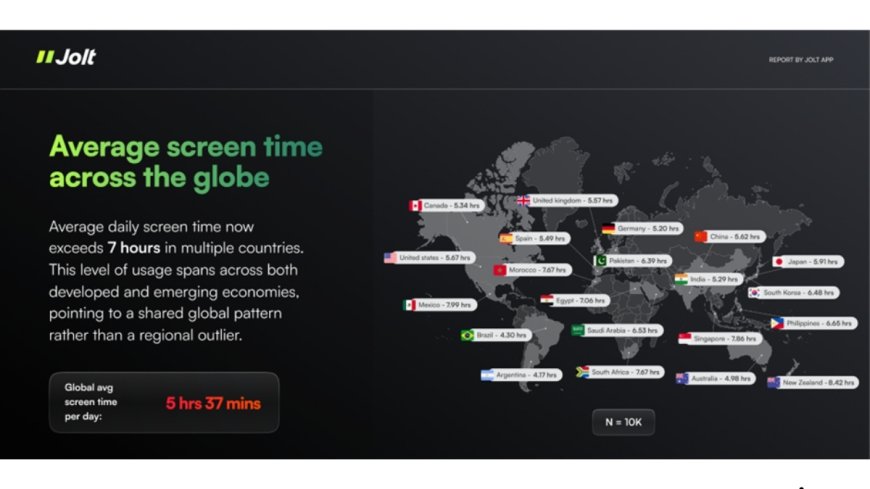

New Delhi [India], March 12: A new global study has found that daily smartphone use has climbed to levels researchers say could reshape how people work, rest, and recover. The State of Human Attention report, released by The Jolt Screen Time App, the best screen time app, analysed the behaviour of nearly 10,000 users and discovered that the average person now spends 5 hours and 37 minutes per day on their phone. The findings suggest that high screen exposure is no longer an exception but a defining feature of modern life.
One of the most significant insights from the report is that elevated screen time is not tied to teenagers alone. Instead, the data shows a steady, long-lasting pattern of high usage from early adolescence to mid-adulthood, indicating that smartphone dependence is now deeply linked to work responsibilities, communication needs, and lifestyle habits.
Key Findings From the Report
- The average user spends 5 hours and 37 minutes each day on their smartphone, which researchers say is now a common global behaviour.
- Legal, consulting, and finance professionals record the highest daily usage, spending an average of 6.75 hours on their phones.
- Academic and research professionals spend an average of 6.4 hours per day on their devices, making them one of the most screen-exposed groups.
- Workers in service, retail, and hospitality roles spend around 6.26 hours daily, showing that high screen time is not limited to office-based jobs.
- Creative, media, corporate, and operations workers approach six hours of daily use, reflecting the growing digital nature of modern work.
- Blue-collar professionals record 5.37 hours of daily usage, proving that smartphone dependence extends across all industries.
- Phone usage rises sharply during rest moments, including late at night before sleeping, early mornings after waking, short breaks, commutes, and waiting periods.

Profession-based data reveals how deeply digital work has expanded. Several industries now exceed six hours of daily phone use, and even roles once considered low-tech now show high digital involvement. Researchers say this reflects a wider shift: smartphones have become central to workflows, expectations, and communication, making long hours of screen exposure “structural rather than optional.”
The report highlights that screen time rises most sharply during moments intended for rest. Instead of being used only during active work, phones are also filling moments of silence, boredom, or emotional release. This pattern raises concerns about the shrinking space for mental recovery.
People who block their time with a clear plan often achieve better results. It is not just about blocking time, but about knowing exactly when to block it. Clarity is important. When you understand which hours matter most, you can protect them and use them wisely.
Research shows that certain time windows are especially important to save through time blocking:
- Mornings: This is when your mind is fresh and focused. It is the best time for important and creative work.
- Work hours: Blocking specific hours during the day helps you avoid distractions and stay productive.
- Before bed: Protecting this time helps you relax, reduce screen use, and improve sleep quality.
Being intentional about these key time periods can make a big difference in your focus, performance, and overall results.
Users often restrict social platforms such as Instagram, YouTube, and TikTok, but the report notes that overall usage remains largely unchanged. This suggests that distraction is driven more by routine, environment, and work culture than by specific apps.

Speaking on the findings, Ankur Solanki, founder of the Jolt App, shared his view on the growing pressure on human attention: “What we see in this data is not a lack of discipline but a system that constantly pushes people toward their screens. Attention has become something people must defend, not something they can freely control. Our digital environments are designed for continuous engagement, and that makes it harder for individuals to find moments of rest or focus. If we want healthier habits, we need healthier environments not just stronger willpower.”
Researchers say the findings should encourage companies, educators, and policymakers to look beyond simple usage limits. As digital work becomes more widespread, understanding how screen time affects focus, recovery, and overall well-being is becoming increasingly important.
The report concludes that the real challenge is not avoiding technology but rebalancing how it fits into daily life, so that attention, rest, and productivity can coexist without competing for space.
If you object to the content of this press release, please notify us at pr.error.rectification@gmail.com. We will respond and rectify the situation within 24 hours.
What's Your Reaction?