

















Ramayana: Can Nitesh Tiwari Make Myth Feel Real Again
Mumbai (Maharashtra) [India], April 15: The problem with making the Ramayana in 2026 is not scale. India knows scale. Bigger sets. Bigger stars. Bigger claims. The problem is trust. After Adipurush, the audience is no longer impressed by numbers alone. People have seen what happens when mythology is treated like a visual-effects experiment. The reaction [...]


Mumbai (Maharashtra) [India], April 15: The problem with making the Ramayana in 2026 is not scale. India knows scale. Bigger sets. Bigger stars. Bigger claims.
The problem is trust.
After Adipurush, the audience is no longer impressed by numbers alone. People have seen what happens when mythology is treated like a visual-effects experiment. The reaction was not just disappointment. It was irritation. The feeling that something familiar had been turned into something synthetic.
That is the shadow hanging over Nitesh Tiwari’s Ramayana.
The teaser arrived on Hanuman Jayanti. The timing was deliberate. So was the message. This is not being presented as another film. It is being presented as an event.
With a reported budget close to ₹4,000 crore, Ramayana is already being described as the most expensive Indian film project ever attempted. But that number is not the real story. The real story is whether Indian cinema can finally create a mythological world that feels lived-in rather than digitally assembled.
The first glimpse gave a partial answer.
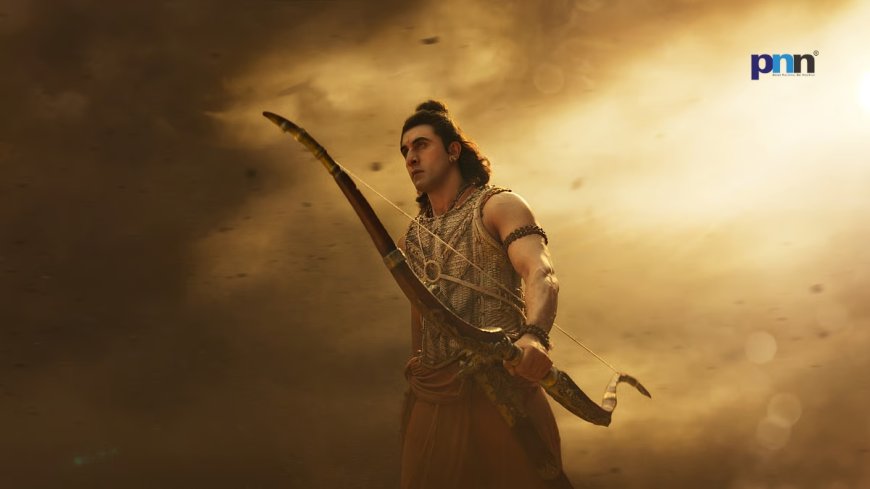
Ranbir Kapoor as Rama looked quieter than expected. Not dramatic. Not overtly heroic. There was restraint in the face, which helped. The role needs stillness more than performance, and for a moment, it worked.
Then the teaser widened.
Ayodhya appeared. Forests appeared. Large digital landscapes unfolded across the screen.
And immediately, the same old concern returned.
Everything looked expensive. Not everything looked real.
The lighting was polished. The frames were clean. Too clean. Some of the forests looked less like forests and more like a game environment waiting for a character to walk through it. The architecture had scale, but not weight. Even online, the language people used was telling: “too smooth,” “too artificial,” “AI-like.”
The criticism is not that the film uses technology. Every large film does. The criticism is that the technology is visible.
The best visual effects disappear into the story. You stop noticing them. Here, people noticed them first.
That matters because the Ramayana does not survive on spectacle alone. It survives on emotional memory. Everyone already has their own version of these places in their head. Ayodhya is not just a city. Lanka is not just a kingdom. They are inherited images. The audience is not coming to discover them. The audience is coming to see whether the film understands them.
To be fair, the team behind this film is probably the strongest any Indian production has assembled.
The project is backed by Prime Focus Studios, DNEG, and Monster Mind Creations. DNEG is not an ordinary VFX studio. This is the company behind Dune, the film that made deserts feel spiritual and silence feel enormous.
That is why expectations are so high. Not because people doubt the budget. Because people know the talent is there.
The music pairing says the same thing. Hans Zimmer and A. R. Rahman working together sounds almost unreal on paper. One brings scale. The other brings feeling. If the film has a chance of finding emotional rhythm, it is probably here.
The casting also feels more considered than flashy.
Sai Pallavi as Sita makes immediate sense because she brings something rare to the screen: calm without distance. Yash as Ravana is the opposite choice—larger, louder, more physically commanding. That contrast could work.
Then there is Arun Govil playing Dasharatha.
That is the one decision that feels quietly brilliant.
For one generation, Arun Govil was Rama. Not an actor playing Rama. Rama. Seeing him now as Dasharatha creates a strange emotional bridge between the television version people grew up with and the new version trying to replace it. The film does not say this directly, but the casting does.
Still, none of this solves the central question.
Can this film make myth feel human again?
That is where Nitesh Tiwari becomes important. He is not known for visual excess. He is known for emotional control. Dangal worked because the characters felt ordinary before they became extraordinary. Chhichhore worked because it understood memory, regret and friendship without forcing them.
Ramayana needs that same instinct.
Because this story does not need to be modernized. It does not need to be louder or darker or more “global.” It only needs to feel true.
That is harder than it sounds.
The makers want this to be India’s answer to Dune or The Lord of the Rings. The ambition is understandable. But those films worked because the world came second. The emotion came first.
You believed in Arrakis because you believed in Paul. You believed in Middle-earth because you believed in Frodo.
The same rule applies here.
If people believe in Rama and Sita, the cities will follow.
If they do not, no amount of VFX will save it.
The first part releases during Diwali 2026. Until then, the conversation will continue. Every teaser will be examined. Every frame will be discussed. The internet has become less patient, but also more precise. People know exactly what they do not want.
They do not want another mythology that looks like software.
They want one that feels like memory.
What's Your Reaction?